
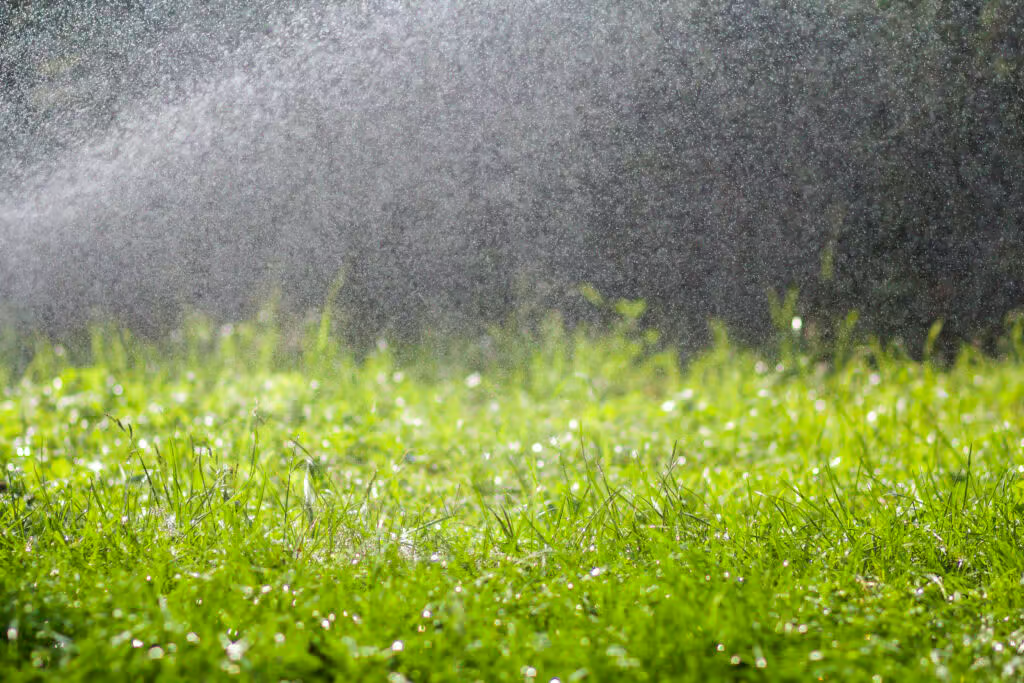
A lawn can be wet and still be thirsty. Run a sprinkler or mister for a few minutes and the grass blades may glisten, the surface may darken, and everything looks like it got a good drink. Dig a little deeper, though, and the soil around the roots may tell a completely different story.
That is the real difference between deep watering and frequent misting. One is designed to move water into the soil where roots can reach it, while the other mainly adds moisture near the surface. For homeowners around Ruskin, that distinction is especially important right now. Rain has been limited, Florida heat can pull moisture from the ground quickly, and current watering restrictions mean every permitted irrigation day needs to count.
Wet Grass and Watered Roots Are Two Different Things
It is easy to judge watering by what you can see above ground, but the most important part of your lawn is hidden underneath it. Established turf needs moisture around its roots, not simply water sitting on the grass blades or barely penetrating the top layer of soil. Deep watering applies a more thorough amount of water less frequently, allowing moisture time to soak farther into the ground. As the surface begins to dry between waterings, roots are encouraged to grow downward and outward in search of available moisture. Over time, that can contribute to a stronger, more established root system.
Misting takes almost the opposite approach. A mister applies a small amount of water over the surface, often wetting the foliage more than the soil underneath. It can have a purpose, particularly when dealing with newly installed sod, but it should not be confused with deeply watering an established lawn.
Stronger Roots Start With What Happens Underground
Healthy-looking grass starts below the surface. If moisture is always concentrated in the top layer of soil, roots have less reason to reach farther into the ground. That can leave an established lawn more dependent on frequent surface moisture. A deeper root system can help your lawn:
- Reach moisture stored farther below the soil surface
- Handle longer stretches between permitted watering days
- Become better established in the surrounding soil
- Cope more effectively with hot, dry conditions
- Make better use of the water you apply
The goal is not to soak the lawn simply for the sake of using more water. It is to get an appropriate amount into the root zone without creating puddles, runoff, or constantly saturated soil.
Frequent Misting Can Look More Helpful Than It Really Is
Seeing freshly misted grass can be satisfying, especially on a hot afternoon. The problem is that much of that moisture may never make it very far into the ground. Florida heat can cause surface moisture to disappear quickly, leaving the root zone relatively dry.
Repeatedly wetting the grass blades can also create unwanted conditions. Foliage that remains damp too often can contribute to an environment where certain turf diseases are more likely to develop. Water sitting on foliage during hot, sunny conditions is another reason to avoid treating misting as the default solution for an established lawn. The important question is not, “Did my grass get wet?” It is, “Did enough moisture reach the soil where my grass can actually use it?”
When Rain Is Scarce, Your Watering Day Matters Even More
Southwest Florida may be famous for sudden afternoon storms, but homeowners around Ruskin have not been able to rely on consistent rainfall lately. When dry conditions continue and the soil has fewer chances to naturally replenish its moisture, the way you use your permitted irrigation time becomes much more important.
A short mist may disappear quickly without doing much for the roots below. Deeper watering gives moisture a better opportunity to penetrate the soil and remain available between irrigation days. Pay attention to your lawn as well. Folded or wilted blades, a bluish-gray color, or footprints that remain visible after you walk across the grass can be signs that your turf is experiencing moisture stress.
More Water Is Not Better Water
Deep watering does not mean leaving your irrigation system running until the yard is soaked. Soil can only absorb water so quickly, and anything beyond that point may become runoff rather than useful moisture. The right approach depends on your soil, turf variety, sprinkler output, drainage, shade, slope, and recent weather. Watch what happens while your irrigation system runs:
- Water flowing onto sidewalks or driveways may indicate it is being applied faster than the soil can absorb it.
- Puddles that linger can point to overwatering or drainage problems.
- Dry patches may indicate poor sprinkler coverage rather than a need to water the entire lawn longer.
- One unusually wet section could mean a sprinkler head needs adjustment.
- Soil that is only damp at the very surface may mean the water is not penetrating deeply enough.
A few minutes spent checking your lawn and irrigation coverage can tell you much more than simply setting a timer and assuming every area is getting what it needs.
New Sod Plays by Different Rules
Freshly installed sod is one situation where lighter, more frequent watering can have an important role. New sod does not yet have an established root system extending into the soil below, so keeping the sod and underlying soil appropriately moist during the early establishment period is critical. As roots begin attaching and growing into the soil, the watering approach changes.
The goal gradually shifts away from keeping the surface consistently moist and toward encouraging deeper root development. Continuing to treat established turf like brand-new sod can keep too much of the watering activity near the surface. There is also a balance to maintain. Fresh sod needs moisture, but it should not remain swampy or waterlogged. Too little water can allow pieces to dry or shrink, while excessive watering can create saturated conditions that are not good for establishment.
Ruskin’s Watering Restrictions Are Still in Effect
Watering correctly is especially important because homeowners currently have to work within regional restrictions. The Southwest Florida Water Management District’s Modified Phase III “Extreme” Water Shortage order remains in effect through October 1, 2026, and includes Ruskin and south Hillsborough County. For properties under one acre, lawn watering is generally limited to one assigned day each week, based on the last digit of the street address:
- 0 or 1: Monday
- 2 or 3: Tuesday
- 4 or 5: Wednesday
- 6 or 7: Thursday
- 8 or 9: Friday
Permitted watering windows are generally from 12:01 a.m. to 4:00 a.m. or 8:00 p.m. to 11:59 p.m. on the assigned day. The restrictions apply to multiple water sources, including public water supplies and private wells. Homeowners should also check current local requirements because stricter rules can take precedence. New lawns and landscaping may be subject to separate establishment provisions, so do not assume the standard weekly schedule applies the same way to freshly installed sod. Check the current rules for your property and situation before irrigating outside your assigned schedule.
Give Your Lawn Water Where It Actually Needs It
When rain is limited and watering days are restricted, spraying a little water over the grass every chance you get is not necessarily doing your lawn a favor. For established turf, what matters is getting useful moisture below the surface and into the root zone. Deep watering can encourage roots to reach farther into the soil, while frequent misting may leave most of the moisture on the foliage and uppermost layer of ground.
Council Growers Sod has been growing quality sod in Ruskin for generations, so we know what Florida heat, dry spells, heavy rains, and changing conditions can mean for a lawn. Whether you are caring for established turf, replacing struggling grass, or preparing to install fresh sod, our team can help you choose the right sod and understand how to care for it after it reaches your property. Visit us in Ruskin or contact Council Growers Sod when you are ready to give your yard a healthier start.