
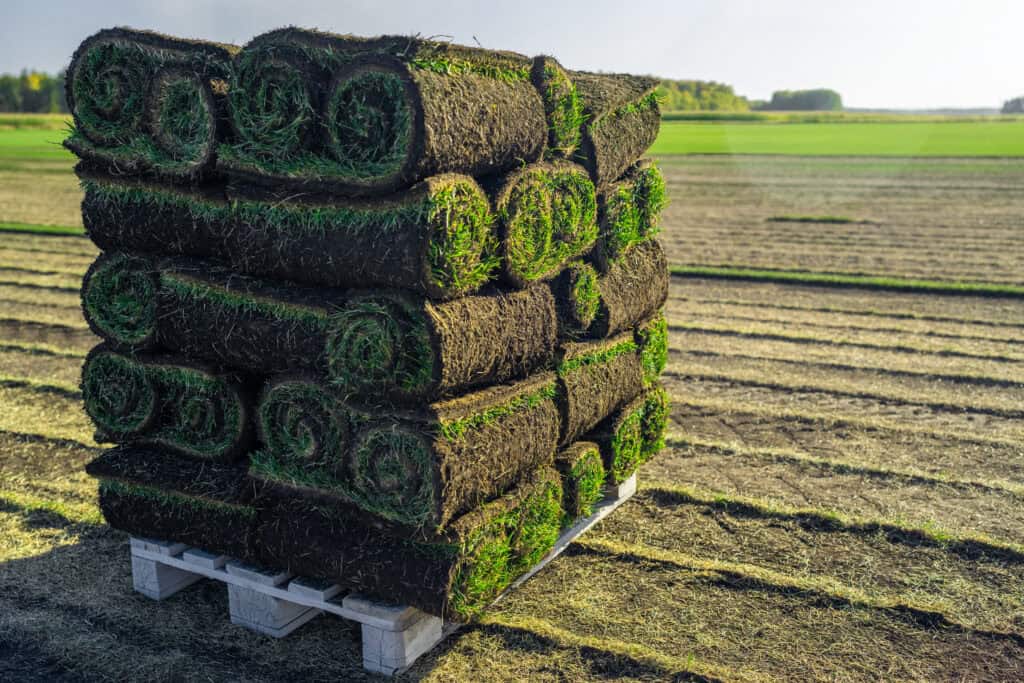
A yard has a funny way of looking smaller until you start measuring every square foot of it. That strip beside the driveway seems tiny. The patch behind the lanai barely looks worth counting. Then you add everything together and realize your sod project is quite a bit bigger than it looked from the back door.
Getting the amount right matters. Too little sod can leave an awkward unfinished section after hours of work, while ordering far too much means paying for grass you may never use. The good news is that you do not need professional surveying equipment or complicated math. A tape measure, a few basic calculations, and a good walk around the property can get you surprisingly close.
Before You Count Pallets, Measure the Actual Lawn
“How many pallets do I need?” is usually the first question homeowners ask. It makes sense, but there is one number you need before worrying about pallets: the square footage of the area receiving new sod. For a rectangular section, multiply the length by the width. A backyard measuring 40 feet by 30 feet is 1,200 square feet. If you are replacing grass in several areas, measure each section separately and add them together. Only count the ground that will actually receive sod. That means subtracting permanent areas such as:
- Driveways and sidewalks
- Patios and pool decks
- Landscaping and flower beds
- Sheds and other structures
- Gravel or decorative rock areas
- Other spaces where grass will not be installed
Do not worry about converting your total into pallets yet. Get the square footage right first, and the rest becomes much easier.
Florida Yards Rarely Make the Math That Easy
If your entire lawn is one big rectangle, you have a pretty easy measuring job ahead of you. Most properties around Ruskin and the Tampa Bay area are not quite that cooperative. Curved beds, screened pools, trees, AC units, walkways, fences, and irregular property lines can make the yard look difficult to calculate. Instead of measuring everything as one complicated shape, break the lawn into smaller sections. Think of the front yard, backyard, side yard, and other spaces as separate mini-projects, then combine their measurements at the end.
Handle the Weird Shapes One at a Time
Rectangles and squares are simply length multiplied by width. For a triangular area, multiply the base by the height and divide by two. Curves do not need to be calculated down to the inch. Measure a reasonable rectangle around the curved section and adjust for the portion that will not receive sod. The goal is a dependable estimate, not a survey of the property. It is usually better to estimate slightly high than discover halfway through installation that your measurements were too tight.
The Small Spots Are Usually What Get Forgotten
The big backyard is hard to miss. The six-foot-wide strip running down the side of your house is much easier to overlook, even though that strip can add hundreds of square feet to a sod order. Once you have your initial measurements, walk the property again. Look behind the shed. Check along both sides of the house. Measure the grass between the sidewalk and street if you are replacing it too. Pay particular attention to narrow areas around fences, gates, driveways, pool enclosures, and landscaping. Individually, they may not seem important. Together, those forgotten spaces can be the difference between finishing the lawn and running out with one section left bare.
Why Your Measurement Should Not Be Your Exact Order
Suppose your final measurement comes to exactly 2,000 square feet. Ordering exactly 2,000 square feet sounds logical, but sod installation does not happen on graph paper. Pieces have to fit around sprinkler heads, trees, landscaping beds, sidewalks, utility boxes, curves, and corners. That means cutting. Some trimmed pieces can be reused elsewhere, while others simply will not fit another spot.
A little extra sod gives you room for those cuts, minor measurement differences, and occasional damaged pieces. How much extra makes sense depends on your yard. A wide-open rectangular lawn should create relatively little waste. A property with lots of curves, obstacles, and unusual angles will generally require more trimming. Take the layout into account rather than automatically ordering the exact number your tape measure produced.
Let the Sod Calculator Do Some of the Work
You have measured the front yard, added the side yard, subtracted the driveway, and probably checked your math twice. Now you can turn those measurements into something useful. Our sod and groundcover calculator makes it easier to estimate the amount of material your project requires. Enter your measurements and use the result as a starting point for planning your order.
This is more reliable than searching online for a generic answer to how much a pallet covers. Pallet coverage can vary depending on the sod variety and how the product is supplied. Start with the actual square footage of your project and the specific sod you plan to purchase. If your yard is especially irregular or you are still unsure about your numbers, talk with us before placing the order. We can help you work through what you have measured.
Square Footage Is Only Half of a Good Sod Order
Knowing you need a certain amount of sod does not automatically tell you which grass belongs in your yard. That decision matters just as much as getting the quantity right. Think about what the lawn is actually like throughout a normal Florida day. Is it baking in full sun for hours? Are sections shaded by mature trees or the house? Does the yard get heavy foot traffic from kids, pets, or regular outdoor activities? How is the area irrigated? Those details can influence which sod variety makes sense for your property. When you contact us, having both your approximate square footage and some basic information about the yard makes it much easier to plan the project properly.
Buying a Few Pieces Is Different From Replacing a Whole Lawn
Not every sod project requires pallets. Maybe a section was damaged, a few spots never recovered, or you only need to freshen up one small area. For smaller projects, we sell sod by the piece at our nursery in Ruskin, with same-day purchase available depending on inventory. A full lawn requires a little more coordination. Pallets can be picked up from us, but large pallet orders generally need a couple of days of advance notice rather than being available for same-day pickup. Planning ahead helps make sure your sod is ready when you are ready to work.
There is also the installation itself to consider. A few pieces can make for a manageable DIY project. Several pallets mean moving, placing, cutting, and properly installing a substantial amount of fresh sod. Council Growers Sod also offers professional installation for homeowners who would rather have the project handled from preparation through the finished lawn.
Measure Twice Now and Save Yourself the Headache Later
Before you place the order, take your measurements outside for one final check. Make sure every area receiving new grass is included, permanent surfaces have been removed from the total, and you have allowed some room for cuts and waste. Ten extra minutes with a tape measure is much easier than realizing you are short when most of the lawn is already finished.
Council Growers Sod helps homeowners in Ruskin and throughout the Tampa Bay area plan projects ranging from a few replacement pieces to complete lawn transformations. Start with our sod calculator to estimate what you need, then contact our team for help choosing your sod, planning your order, arranging pickup, or scheduling professional installation.